One unusual spot changed everything—and her story is encouraging others to catch cancer early.
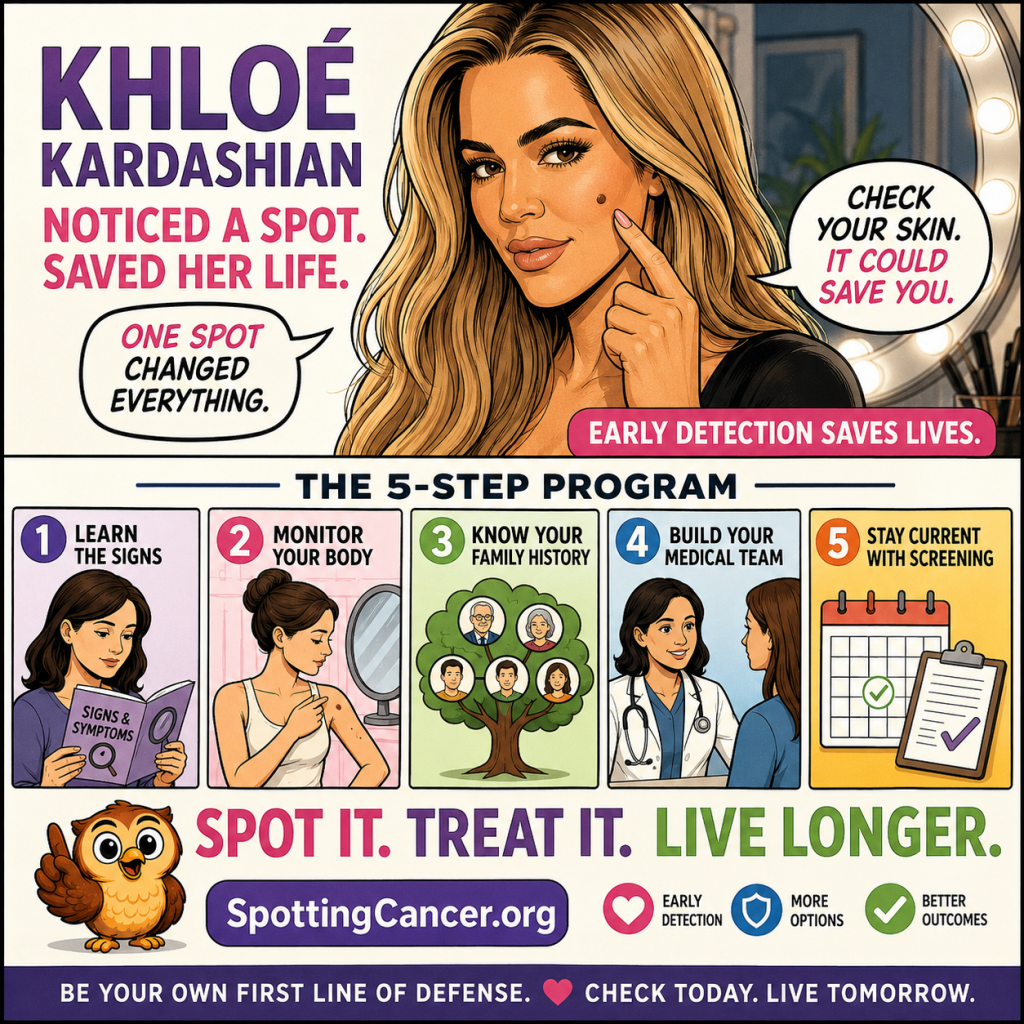
When Khloé Kardashian shared her experience with melanoma, she did more than reveal a personal health battle—she started an important conversation about paying attention to your body.
After noticing an unusual bump on her face that wouldn’t go away, Khloé sought medical attention. The lesion was removed and diagnosed as melanoma, one of the most aggressive forms of skin cancer. Fortunately, because it was identified and treated, she was able to move forward with recovery while encouraging millions of followers to make their own health a priority.
Her story is a powerful reminder that cancer often begins with something small—a new spot, an unusual bump, or a subtle change that can easily be overlooked.
Skin Cancer Doesn’t Always Look Dangerous
Melanoma and other forms of skin cancer don’t always appear dramatic. Some begin as a mole that changes over time, while others develop as a small bump, sore, or patch of skin that simply doesn’t seem right.
The most important habit you can develop is becoming familiar with your own body. When you know what’s normal, you’re much more likely to notice when something changes.
Early detection saves lives. That’s why SpottingCancer.org encourages everyone to take an active role in monitoring their health—not just during annual checkups, but every day.
Take Action with the SpottingCancer.org Five-Step Program
Cancer doesn’t wait until your next doctor’s appointment. That’s why our Five-Step Program helps you become your own first line of defense.
Step 1: Learn the Signs & Symptoms
The first step toward early detection is education.
You can’t recognize a warning sign if you don’t know what to look for. Learn the signs and symptoms associated with different types of cancer, including changes in your skin, unexplained lumps, persistent sores, unusual bleeding, unexplained weight loss, and other concerning changes.
Knowledge is the foundation of early detection.
Act Now!
Go to Step 2 to learn how to monitor your body.
Now Go to Step 2.
Don’t Forget to Review All Steps.
Step 2: Monitor Your Body
Cancer grows 24 hours a day, seven days a week.
That’s why regular body monitoring is so important. Between doctor visits and recommended screenings, you are the person most likely to notice a new mole, changing skin lesion, or unusual lump.
Perform routine self-exams and become familiar with your normal appearance. Pay attention to changes in your skin, moles, freckles, scars, and any new growths. If something appears different or continues to change, don’t ignore it.
Khloé Kardashian’s decision to investigate an unusual spot is an excellent example of why body monitoring matters.
Step 3: Know Your Family History
Your family’s medical history provides valuable information about your personal cancer risk.
Take time to learn which cancers have affected parents, grandparents, siblings, aunts, uncles, and other close relatives. Record this information and share it with your healthcare providers.
A well-documented family history helps your medical team recommend personalized screening schedules and preventive care based on your unique risk factors.
Step 4: Build Your Medical Team
Cancer is not self-healing.
If you discover a warning sign or symptom, consider it a red flag that deserves prompt medical evaluation.
Don’t attempt to diagnose yourself online or assume a concerning change will disappear on its own. Schedule an appointment with your physician or dermatologist so they can determine whether the finding is cancer or another medical condition requiring treatment.
Early conversations with your healthcare team can make all the difference.
Step 5: Stay Current with Screening & Testing
Not every cancer can be seen during a self-exam.
Many cancers develop silently, which is why routine screenings remain an essential part of staying healthy.
Work with your medical team to establish a schedule for screenings and testing that matches your age, family history, lifestyle, and risk factors. Mammograms, colonoscopies, skin examinations, Pap tests, prostate screenings, and other preventive tests can detect cancer before symptoms ever appear.
Awareness Leads to Action
Khloé Kardashian’s willingness to share her melanoma diagnosis has encouraged millions of people to look more closely at their own skin and seek medical advice when something doesn’t seem right.
That’s exactly the kind of awareness that saves lives.
Whether it’s a changing mole, a persistent sore, or another unusual symptom, don’t wait to see if it gets better. Learn the signs, monitor your body regularly, understand your family history, partner with your medical team, and stay on schedule with recommended screenings.
At SpottingCancer.org, we believe early detection begins with informed action. Review all five steps, make them part of your routine, and encourage your family and friends to do the same.
Because the earlier cancer is found, the more treatment options—and hope—you have.
Early detection …..leads to longer life
Your cancer recovery chances are enhanced by early detection
Early detection enhances long life
Spot it… Treat it …Live longer.
Want to help with our mission? Donate today!