
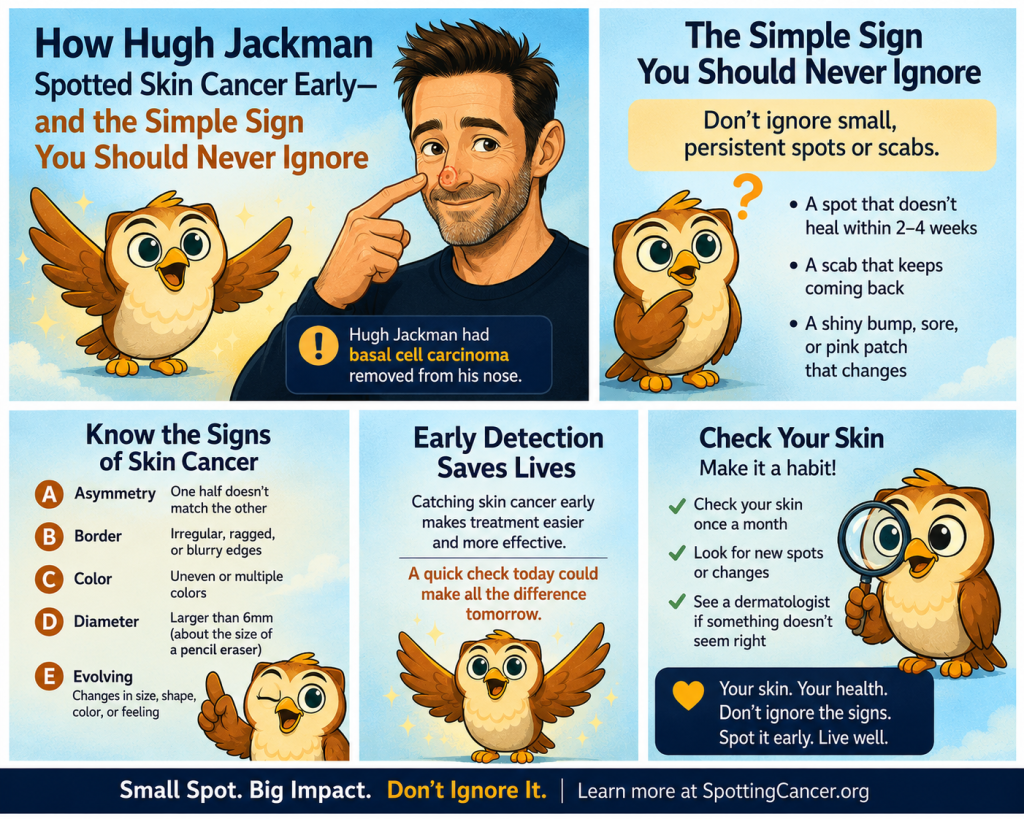
A small spot.
A scab that won’t heal.
A patch of skin that keeps coming back.
That’s exactly what actor Hugh Jackman noticed on his nose before being diagnosed with basal cell carcinoma, the most common form of skin cancer. His story has become an important reminder that early detection matters — and that paying attention to small changes in your skin could make a major difference.
The Small Signs People Often Ignore
One of the biggest dangers with skin cancer is that many early warning signs don’t seem urgent at first. A tiny pink spot or persistent scab can easily be brushed off as dry skin, irritation, or a minor scratch.
But skin cancer often develops slowly and quietly.
Some signs to watch for include:
- A spot that doesn’t heal within 2–4 weeks
- A scab that repeatedly returns
- A shiny bump, sore, or pink patch
- A mole or spot that changes over time
- Areas that itch, bleed, or become crusty
These symptoms don’t automatically mean cancer — but they do mean it’s worth paying attention.
Why Early Detection Matters
The good news is that skin cancer is highly treatable when caught early. In fact, many skin cancers can be removed quickly and successfully before they become more serious.
The challenge is that too many people wait.
They assume the spot is “probably nothing.” They plan to check it later. Months pass. The area changes more. Eventually, treatment becomes more involved than it needed to be.
That’s why awareness is so important.
A quick skin check today could help you catch something early — when treatment is simpler, recovery is easier, and outcomes are significantly better.
Learn the ABCDE Signs of Skin Cancer
One of the best ways to monitor your skin is by learning the ABCDE warning signs commonly associated with melanoma and other suspicious spots.
A — Asymmetry
One half doesn’t match the other.
B — Border
Edges are irregular, ragged, or blurry.
C — Color
The spot has uneven coloring or multiple shades.
D — Diameter
Larger than 6mm (about the size of a pencil eraser).
E — Evolving
The spot changes in size, shape, color, or feeling.
Even if a spot doesn’t check every box, changes should never be ignored.
Make Skin Checks a Habit
You don’t need to become obsessed with every freckle or mole. But you should become familiar with your skin.
Checking your skin once a month can help you notice changes earlier. Look at areas that get frequent sun exposure, including your face, nose, scalp, shoulders, arms, and legs.
And remember: skin cancer doesn’t only happen to older adults or people who spend all day outside. It can affect anyone.
If something looks unusual or simply doesn’t feel right, schedule an appointment with a dermatologist. Trusting your instincts is often one of the smartest health decisions you can make.
Don’t Ignore the Signs
Hugh Jackman’s story is a powerful example of how something small can turn into something serious — and how early action can make all the difference.
The goal isn’t fear.
The goal is awareness.
A small spot today could be the early warning sign your body is trying to give you. Paying attention now may help protect your health in the future.
At SpottingCancer.org, we believe education and early detection save lives. Take a few minutes today to review the signs of skin cancer, learn what to look for, and share this information with someone you care about.
Because when it comes to cancer, spotting it early matters.